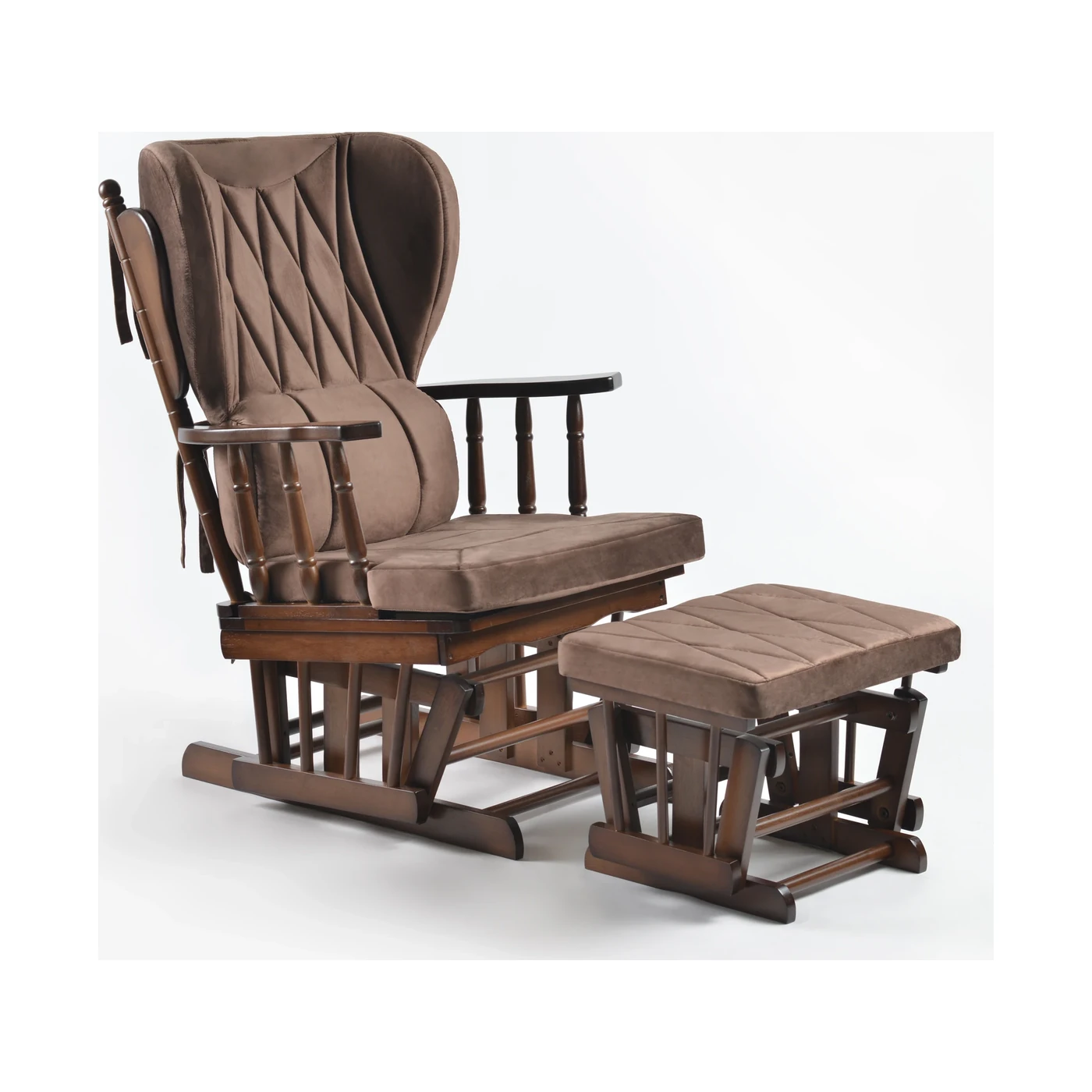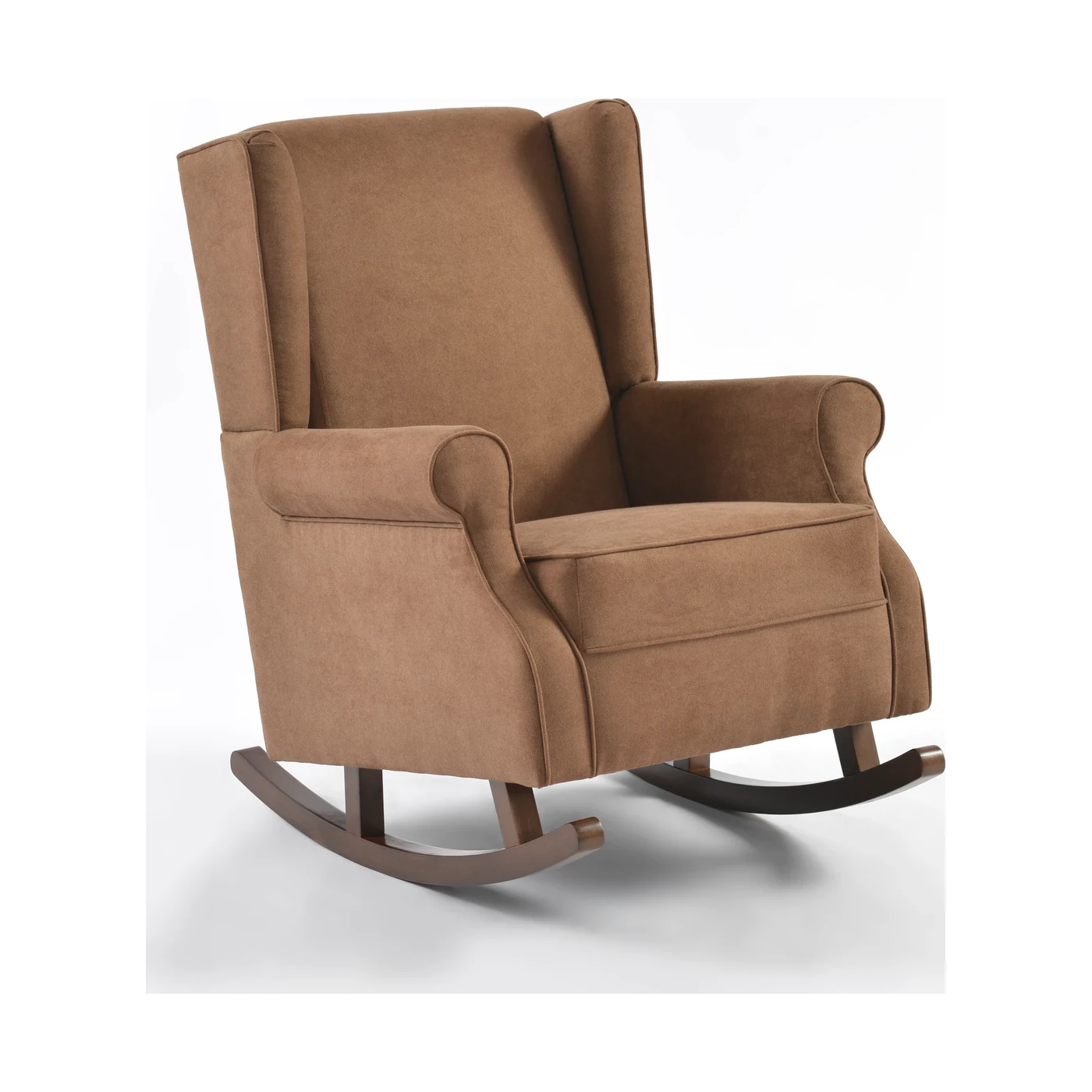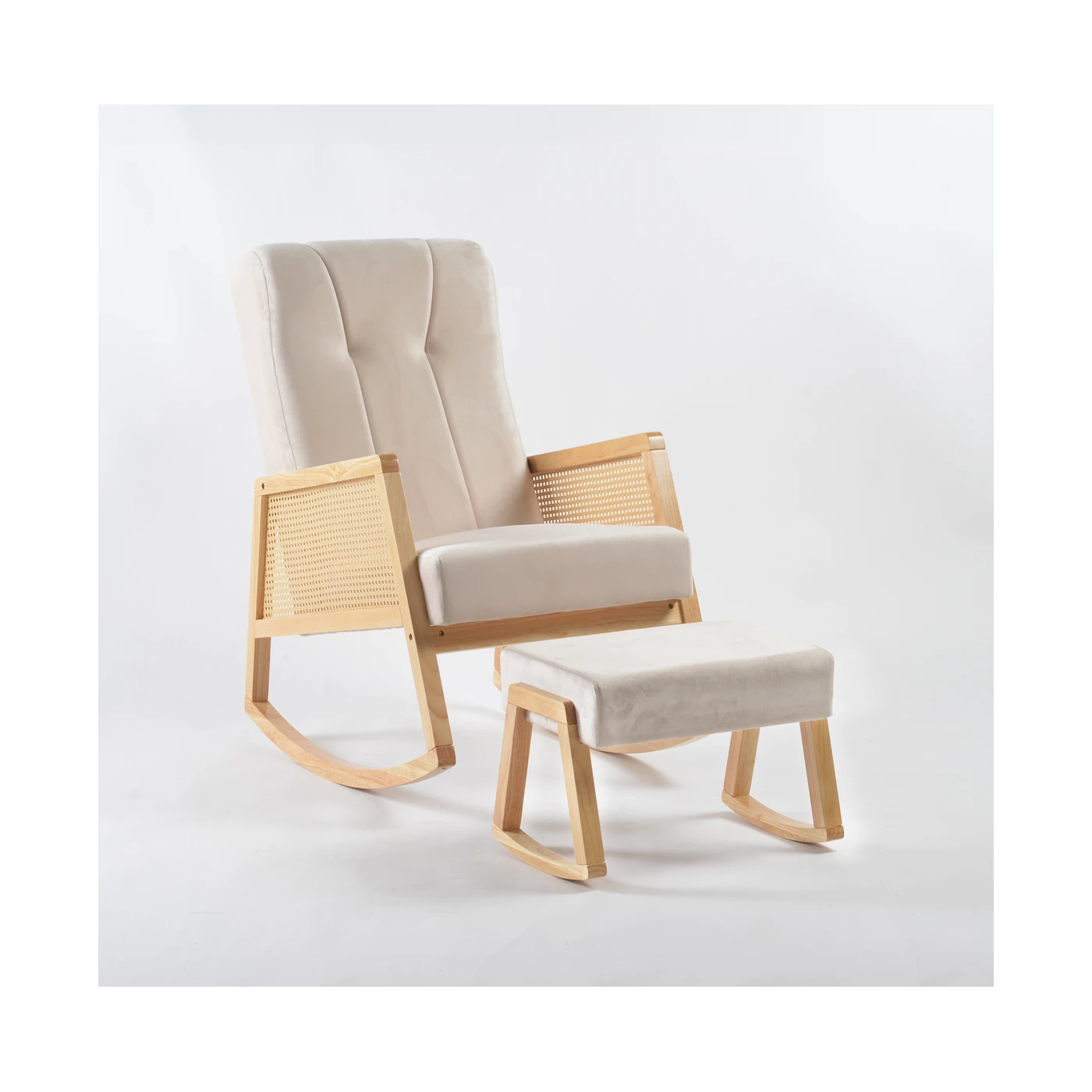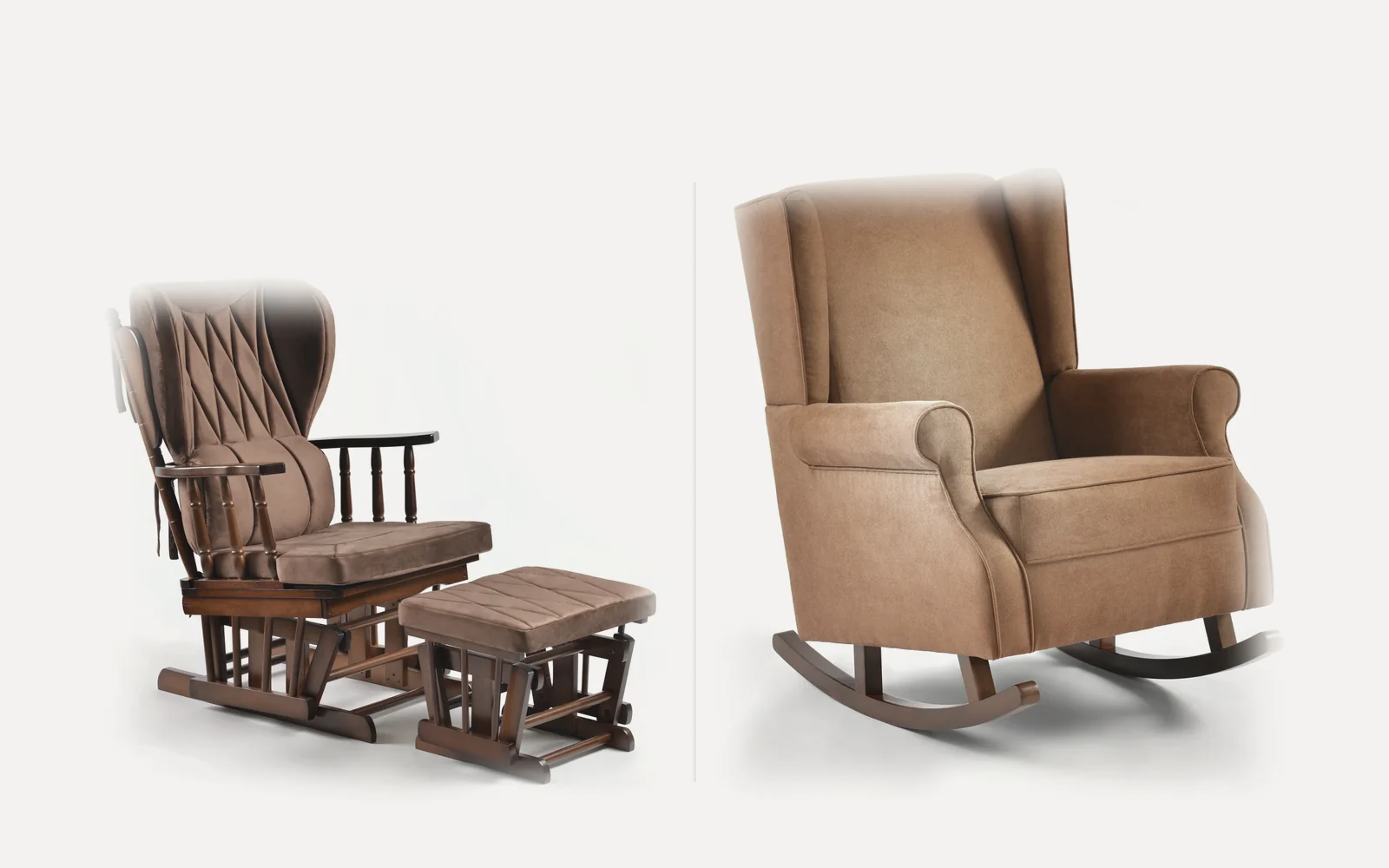
Both move. That is where the similarity ends. A glider travels along a level line; a rocker tips through an arc on curved runners. The two feel different to sit in, they take up different amounts of room, and they suit different corners of a house.
Level travel against an arc
A glider's mechanism carries the seat forward and back without changing its angle. The motion is even, quiet and, in the sense that matters at two in the morning, boring — you can keep it going without paying attention to it. That is exactly why our Comfort Deluxe and Joli sets are built the way they are.
A rocker moves through an arc, so the whole chair tilts as it goes. It is a more pronounced, more traditional motion, and for reading or resting rather than settling a baby, plenty of people prefer it.
Room, and what each one needs
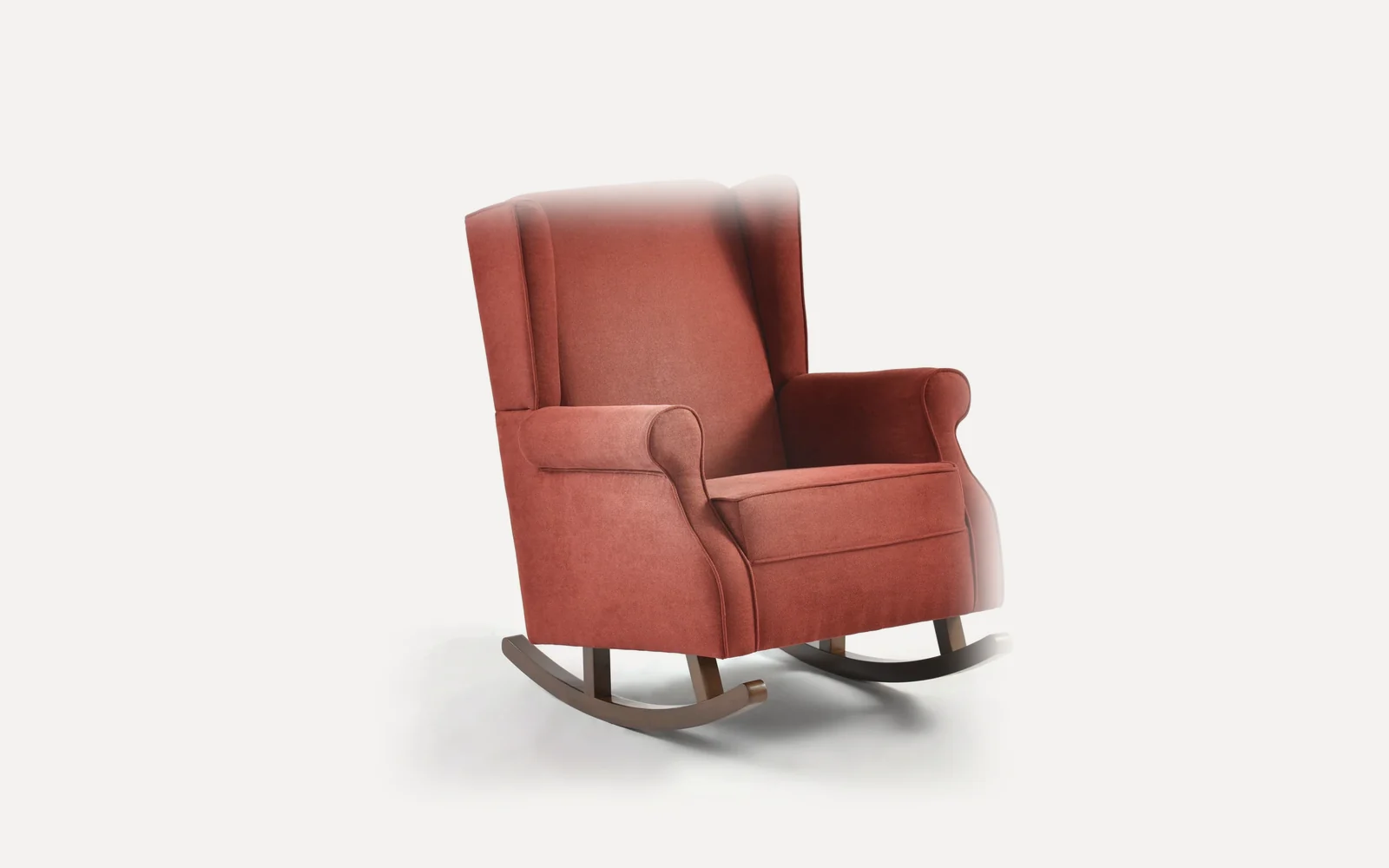
A glider needs clearance front and back for the travel, and if the ottoman glides too — ours do — it needs its own. A rocker needs clearance behind it for the runners and a floor that will forgive them. The Haven stands on solid hardwood legs in a warm walnut finish, which is worth a rug on a hard floor.
Where the Haven wins
Head and neck support. The Haven is a tall wingback, so it holds you from the shoulders up, with wide, softly rolled arms and a velvet-touch fabric that resists everyday wear and keeps its colour. As a piece of furniture it is also the more neutral of the two silhouettes: a wingback moves between modern and traditional rooms in a way that a visible glide mechanism does not.
If you want the rocking motion with the footrest that makes a long sit work, the Lilly Deluxe pairs a cushioned rocking chair with a matching ottoman.
The short version
Feeding a newborn, night after night, in a room where the chair will live for a year or two: glider. Reading, resting, a living room or a bedroom corner where the chair is also a piece of furniture in its own right: rocker.