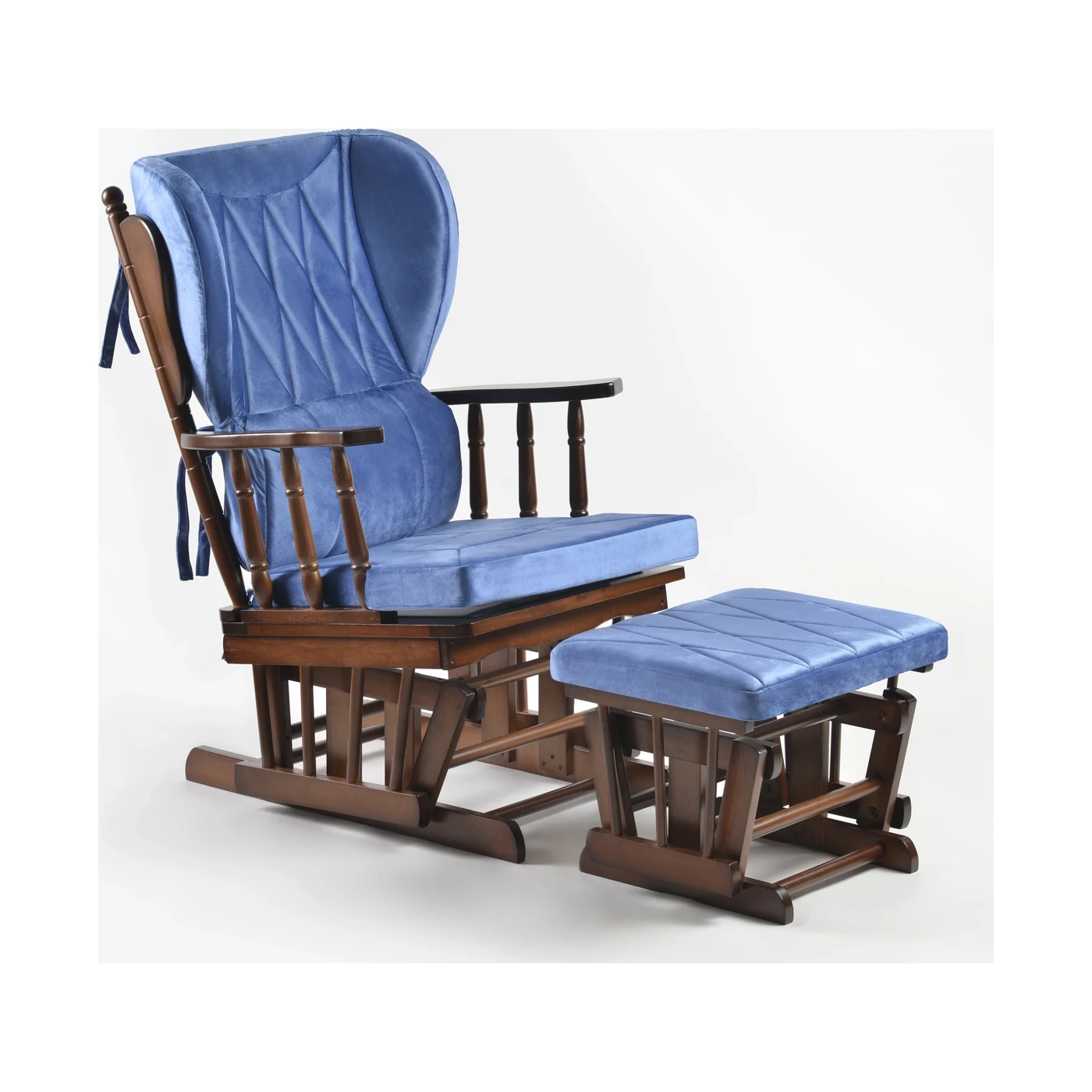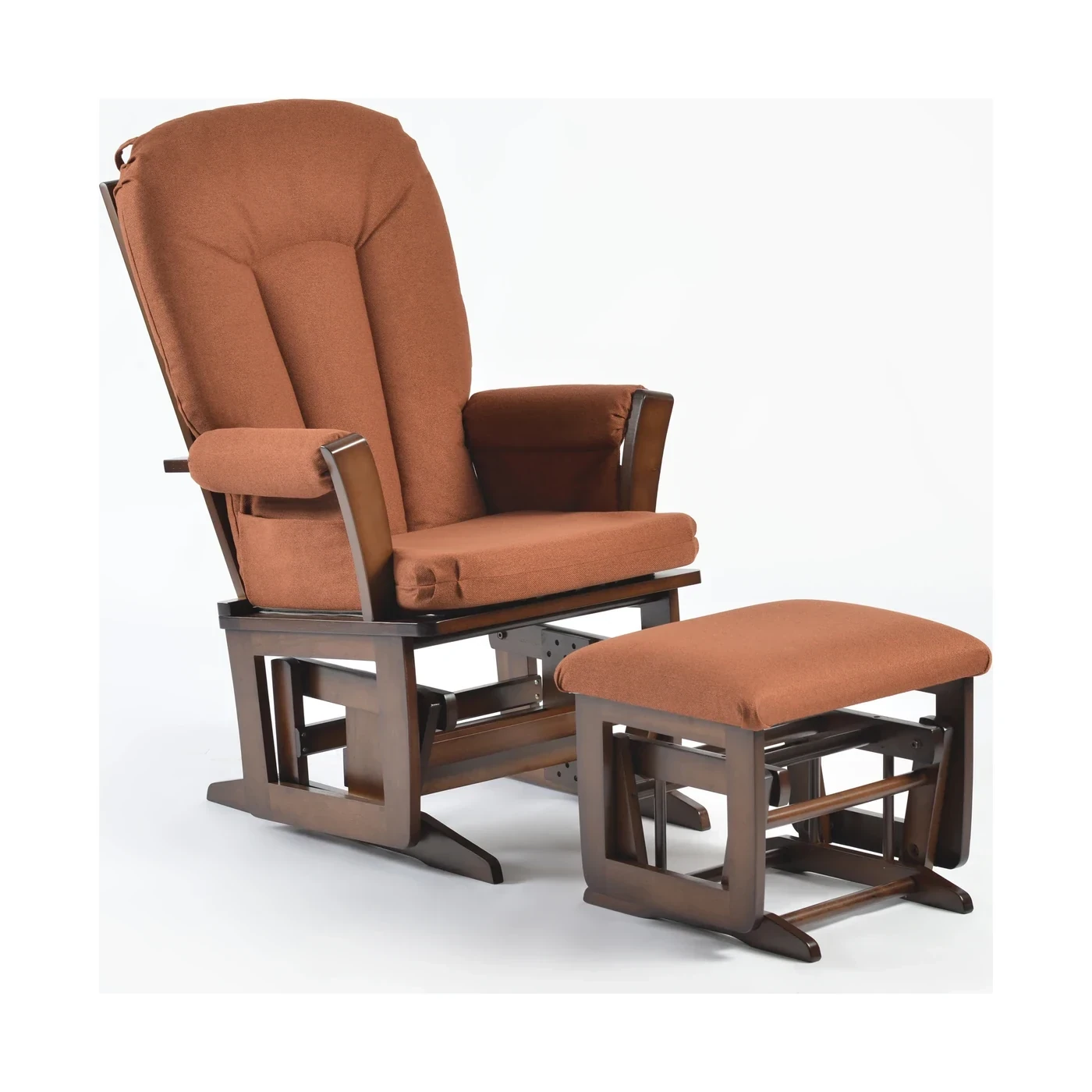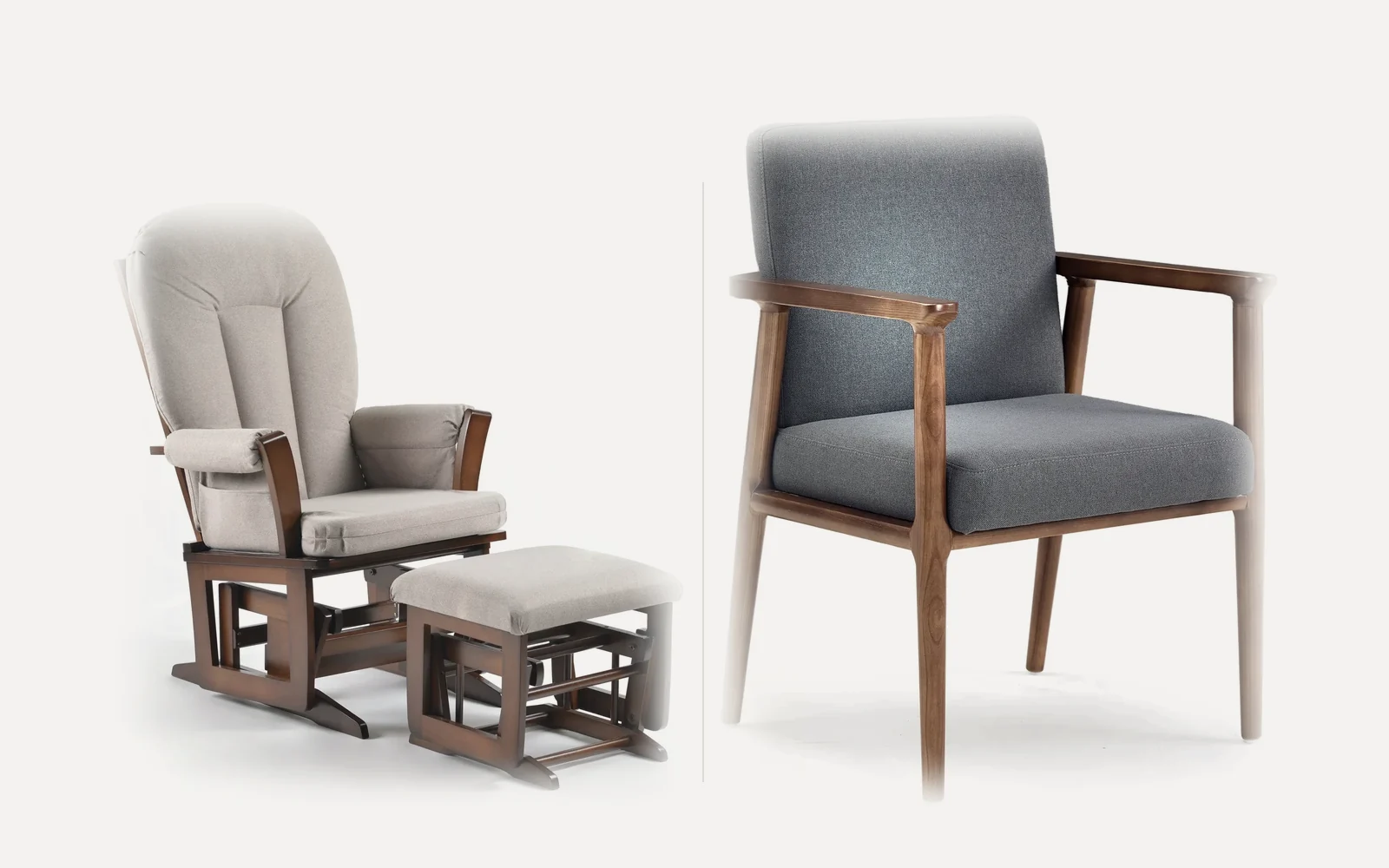
On paper a glider and an armchair are the same object: a seat, a back, two arms. The difference shows up at two in the morning, when a steady rocking motion settles a baby faster than sitting still ever will.
The motion is the whole argument
A glider travels in a smooth, level line. A rocker on curved runners tips you slightly backwards and forwards; an armchair does not move at all. That level travel is the reason gliders ended up in nurseries in the first place — it is a motion you can keep going for twenty minutes without thinking about it, and it does not startle someone who has just fallen asleep on you.
Support in the places a feed needs it
A glider built for this job has a higher back and wider armrests than a standard armchair. That is not styling. It is so you can support a baby's head and your own forearm at the same time, for long enough that your shoulders do not report it the next morning.
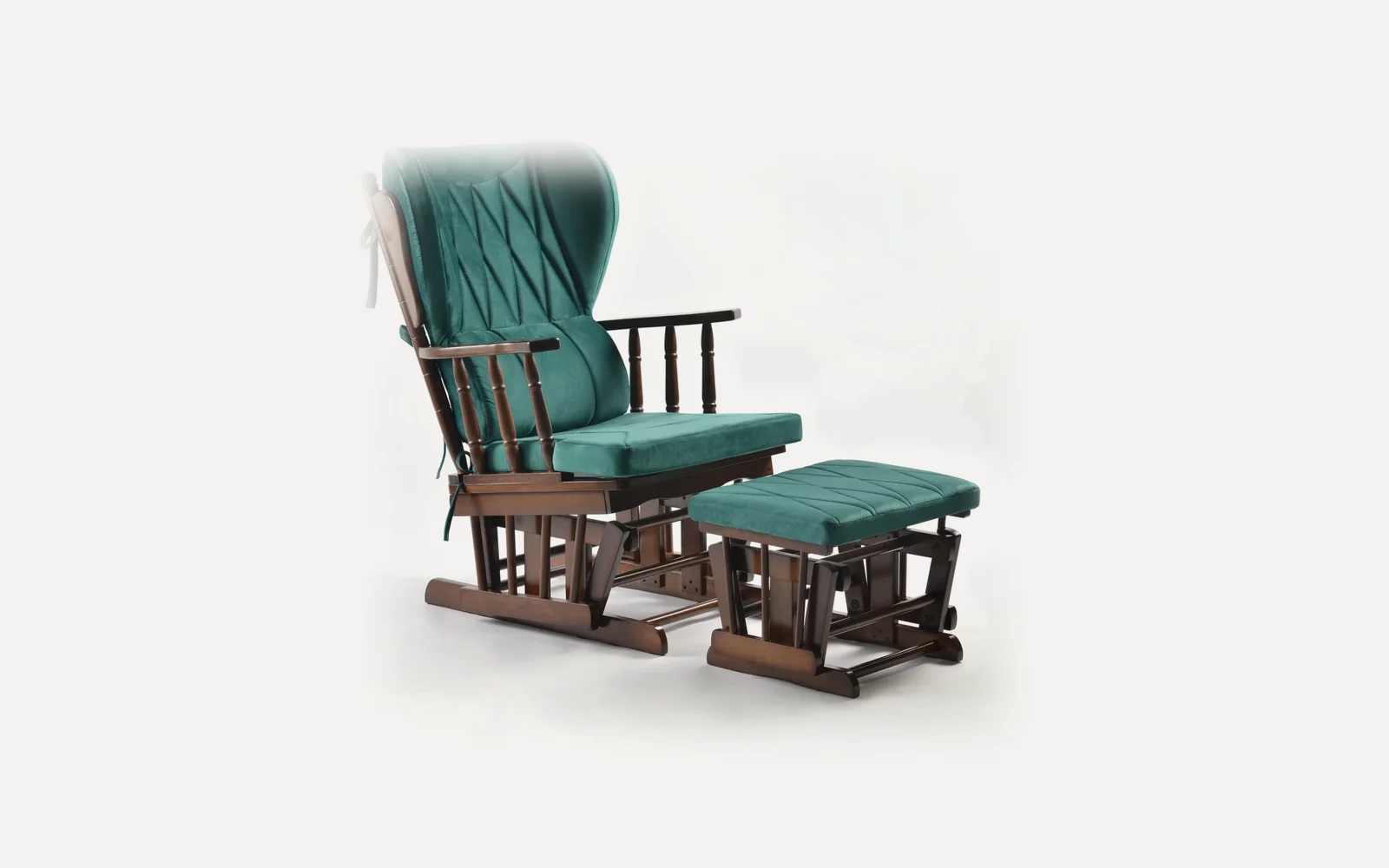
The ottoman is the part people leave out of the budget and then buy separately three weeks later. On our sets it glides in time with the chair, which turns an upright seat into something you can actually recline into.
What an armchair still does better
An armchair is lighter to move, it needs no clearance behind it, and it costs less to put in a room. If the chair is going somewhere it will only be sat in for twenty minutes at a stretch, the motion is not worth the footprint, and something like the Sidney or the Leo Chair is the more sensible piece of furniture.
The honest version is this: for the nursery years, the motion wins. Outside them, it is a preference.
It does not have to leave the room
Unlike most nursery-specific furniture, a well-made glider has a second life. Ours are built and upholstered to sit in a living room or a reading corner without announcing what they were bought for, which is worth remembering when you are choosing the colour. We wrote more about that in where the chair goes after the nursery.